Why Stretching and Massaging Your Dystonia Won't Work: The Hypertonic Muscle Trap
Jun 29, 2026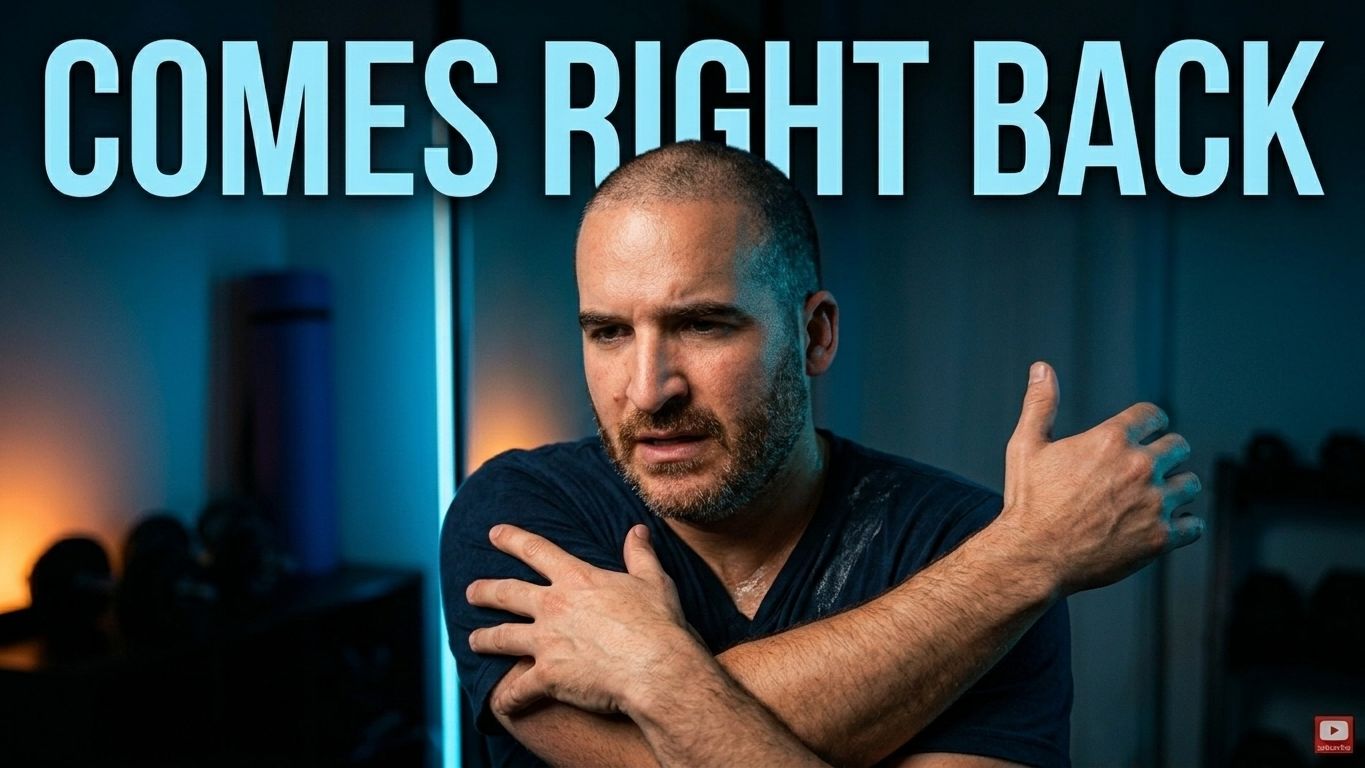
This article is based on a video originally published on the Hope for Dystonia YouTube channel.
If you're living with dystonia, you've probably experienced the overwhelming urge to stretch, massage, and force your spasming muscles to relax. It's the most natural instinct in the world—something hurts, so you try to fix it. But what if this very instinct is keeping you stuck in the pattern you're trying to escape?
Understanding why obsessing over your hypertonic muscles backfires—and where your real leverage lies—can completely transform your approach to healing.
Watch the Full Video
Why Stretching and Massaging Your Dystonia Won't Work: The Hypertonic Muscle Trap
https://youtu.be/rDvJTk4Zvc8?si=xW0ouQhINoPcIjso
Why This Topic Matters for Your Dystonia
This understanding is particularly relevant if you have:
- Cervical dystonia (neck pulling or twisting)
- Oromandibular dystonia (jaw dystonia)
- Focal dystonia affecting specific muscle groups
- Any form of dystonia where you've been focused on "releasing" tight muscles
The pattern of obsessing over hypertonic muscles is one of the most common traps in dystonia recovery. Breaking free from it opens up entirely new possibilities for healing.
The Instinct That Makes Perfect Sense
When dystonia first shows up, the logic seems obvious:
This muscle is spasming → this muscle is the problem → I should fix this muscle.
So you start paying maximum attention to the hypertonic muscles—the ones that are tight, contracted, pulling. You stretch them. You massage them. You apply heat or cold. You buy foam rollers, massage guns, and every tension-release gadget you can find.
This makes complete sense. Something in your body is suddenly demanding enormous attention, and it feels natural to focus your awareness there.
But here's what happens next.
Why This Becomes a Trap
When you obsess over your hypertonic muscles, several things happen simultaneously:
| What You're Doing | What Your Brain Learns |
|---|---|
| Constantly focusing on the tight muscles | These muscles become even more important in awareness |
| Trying to "release" them through force | The pattern of tension gets reinforced |
| Monitoring them throughout the day | The signals from these muscles get prioritized even more |
| Forgetting about other muscle groups | The hypotonic (underused) muscles fade further into the background |
The more attention you give to the muscles that are already overused, the more salient they become in your brain's map of your body. The messages coming from those muscles get amplified. And the muscles that should be sharing the load—the hypotonic, forgotten ones—fade even further from awareness.
In trying to get rid of the pattern of tension, we reinforce the very pattern we're trying to get away from.
You end up stimulating the very muscles that should be resting.
The Two Places Where You Have Real Leverage
If obsessing over the spasming muscles isn't the answer, then what is? There are two places where you actually have power.
Leverage Point 1: Reconnecting with the Hypotonic Muscles
Your hypertonic muscles aren't spasming in isolation. They're overworking because other muscle groups—the hypotonic ones—have been forgotten.
Why Muscles Become Hypertonic:
| Factor | What's Happening |
|---|---|
| Neural Imbalance | The brain sends too much "electricity" to certain muscles |
| Compensation | Hypertonic muscles take over for underactive ones |
| Attention Bias | We focus on what hurts, reinforcing the imbalance |
| Lost Connection | Hypotonic muscles fade from our body awareness |
Think of it like a team where one person is doing everyone else's job. That person is exhausted and stressed (hypertonic), while the rest of the team has basically checked out (hypotonic).
The solution isn't to massage the exhausted team member harder. It's to bring the rest of the team back online.
What Reconnecting Looks Like:
- Developing awareness of muscle groups you've lost connection with
- Gently inviting those forgotten areas back into participation
- Allowing the overworked muscles to finally rest as the load gets shared
This is at the heart of the Hope for Dystonia method—reintegrating the hypotonic, forgotten muscles rather than obsessing over the hypertonic ones.
Leverage Point 2: Understanding the Guarding Pattern
Your muscles aren't just tight for no reason. There's a bigger pattern at play—a pattern of protection.
Common Guarding Patterns:
| Pattern | What It Looks Like |
|---|---|
| Hypervigilance | Staying constantly alert to feel safe |
| Self-monitoring | Continuously checking how you show up in the world |
| Freezing | Making yourself small, holding, hiding |
| Bracing | Preparing for impact that never comes |
This guarding pattern is there for a reason. Your nervous system learned at some point that this protection was necessary. And now it's running on autopilot, even when the original threat is long gone.
We need to learn to understand what it is that we're guarding, what the stories and beliefs in our minds are that lead to this guarding—so that we can little by little help the body and the nervous system feel that it is okay to let go.
When you address the deeper pattern—when you help your nervous system feel safe enough to release the guarding—the muscles that are spasming have less and less reason to spasm in the first place.
A Word About Temporary Relief
Does this mean you should never get a massage? Never apply heat to sore muscles? Never seek any relief at all?
Of course not.
Sometimes you need to take the edge off. Sometimes a warm compress or a gentle massage can help you get through the day.
The key is how you approach it.
| Approach That Reinforces the Pattern | Approach That Supports Healing |
|---|---|
| "I'm going to massage this muscle until it relaxes if it's the last thing I do" | "I'm offering my body some temporary comfort" |
| At war with your symptoms | At peace with needing relief |
| Ten different gadgets attacking the tension | Gentle, caring touch that communicates safety |
| Frustration and force | Warmth and acceptance |
When the message your nervous system receives is one of relaxation—not aggression—temporary relief can actually support your healing rather than reinforce the pattern.
But let's be clear: you're not going to rewire your brain out of dystonia by focusing on the symptom.
You need to focus on the terrain that produces the symptom in the first place.
The Terrain, Not the Symptom: A Paradigm Shift
This is perhaps the most important shift in perspective:
Your dystonia isn't just a muscle problem. It's a pattern—a pattern that involves your nervous system, your emotional history, your relationship with safety and stress.
| Symptom-Focused Approach | Terrain-Focused Approach |
|---|---|
| Targets the spasming muscle | Addresses the whole system |
| Temporary relief at best | Creates conditions for lasting change |
| Reinforces brain's attention to problem areas | Rebalances the neural map |
| Fights the body | Works with the body |
| Increases frustration | Builds compassion and understanding |
When you focus only on the symptom (the spasming muscle), you miss the terrain that's producing it.
When you focus on the terrain—reintegrating forgotten muscles, addressing the guarding pattern, helping your nervous system feel safe—the symptom has less and less reason to exist.
What This Looks Like in Practice
Instead of spending your energy trying to "fix" the muscles that are spasming, you can:
Reintegrate the hypotonic muscles—the ones that have been forgotten, that aren't participating in movement the way they should be. This shifts the burden off the overworked muscles and allows them to finally rest.
Bring love and care to the parts of you that are hurting—the parts that learned they needed to guard, to protect, to stay vigilant. When these parts feel seen and safe, the guarding pattern can begin to soften.
Trust the process—understanding that healing isn't about forcing your body into submission, but about creating the conditions where your nervous system can find its way back to balance.
We can actually break away from the pattern of constant tension instead of feeding it.
Key Principles for Breaking the Hypertonic Trap
1. Awareness Over Force
Retraining works best when you're curious and regulated—not when you're forcing yourself through exercises while frustrated and dysregulated.
Before working with your body:
- Ground yourself
- Take several deep breaths
- Connect with an intention of exploration and play
- Release the urgency to "fix" yourself
2. Reconnect, Don't Attack
Instead of attacking tight muscles, focus on waking up sleeping ones. Use:
- Gentle proprioceptive input to underused areas
- Soft touch to bring awareness where it's been lost
- Curiosity about what muscles feel "forgotten"
3. Address the Deeper Pattern
Ask yourself:
- What might I be guarding against?
- When did this pattern of tension begin?
- What would it feel like to let go—even a little?
These questions open doorways that no amount of stretching can access.
The Hope for Dystonia Method: Comprehensive Recovery
Understanding the hypertonic trap is one piece of a larger, integrated approach to dystonia recovery that includes:
Cranial Nerve Understanding Deep knowledge of how your cranial nerves function and interact, particularly the pathways that govern muscle tone in your head, neck, and body.
Biomechanical Retraining Practical tools for rebalancing patterns—not by attacking tight muscles, but by reintegrating forgotten ones and redistributing neural activity.
Nervous System Regulation Building capacity for safety, rest, and parasympathetic recovery so your body can finally release patterns of chronic guarding.
Embodied Attachment Work Addressing developmental patterns that contribute to chronic activation and the belief that constant vigilance is necessary for survival.
Your Next Step: The Free Recovery Roadmap
If this perspective resonates with you—if you're ready to stop fighting your body and start understanding it—we invite you to download the Hope for Dystonia Recovery Roadmap.
This free resource includes:
- The eight steps of dystonia recovery
- Introduction to hypertonic/hypotonic rebalancing
- Overview of the Self-Healers Academy
- Free preview of core exercises
Download the Free Recovery Roadmap →
There's no pressure or urgency. Just an invitation to explore whether this path of understanding, embodiment, and self-directed healing feels right for you.