Why Sensory Tricks Stop Working: From Temporary Relief to Lasting Change
Jun 29, 2026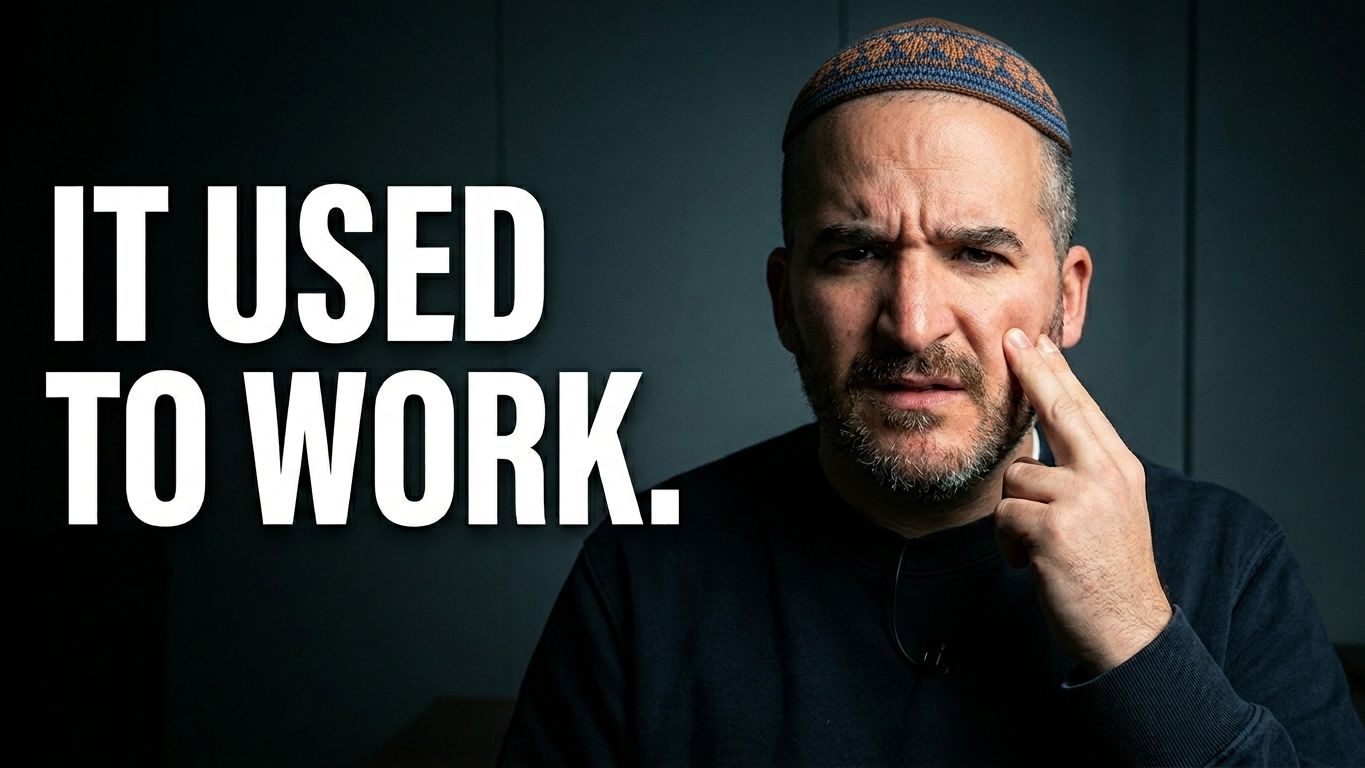
This article is based on a video originally published on the Hope for Dystonia YouTube channel.
If you've lived with dystonia for any length of time, you've probably discovered sensory tricks—those surprising moments when a simple touch to your face or jaw allows your head to straighten, your tremor to pause, or your muscles to finally relax. And if you've relied on them for a while, you've probably also experienced the frustration of watching them stop working altogether.
Understanding why sensory tricks work, why they fade, and how to transform their underlying principle into lasting change can completely shift your approach to healing.
Watch the Full Video
Why Sensory Tricks Stop Working: From Temporary Relief to Lasting Change
https://youtu.be/Ddo-JCwzIRE?si=gD_KnCNKh_pEhD8L
Why This Topic Matters for Your Dystonia
This understanding is particularly relevant if you:
- Have cervical dystonia and use touch to straighten your head
- Have oromandibular dystonia and touch your jaw to speak more easily
- Have found sensory tricks that used to work but no longer do
- Feel confused about why temporary relief doesn't translate into lasting improvement
- Want to understand how to actually engage neuroplasticity in your recovery
The phenomenon of sensory tricks reveals something profound about how dystonia works—and points directly toward what actually creates change.
What Are Sensory Tricks?
Sensory tricks are those simple gestures and moments of contact that seem to allow dystonia to take a step back. For a moment, it's as if the nervous system forgets the dystonia and inhabits the body in a different way.
Common Examples:
| Dystonia Type | Sensory Trick | What Happens |
|---|---|---|
| Cervical dystonia | Touching the face or chin | Head straightens or tremor pauses |
| Oromandibular dystonia | Light touch on jaw | Speaking becomes easier |
| Blepharospasm | Touching near the eyes | Eyelid spasms reduce |
| Focal hand dystonia | Touching the affected hand | Movement becomes more fluid |
For many people, discovering a sensory trick brings tremendous hope. It proves something important: you are not permanently stuck in your dystonic position. Your nervous system can do something different.
But then comes the frustration.
The Two Problems with Sensory Tricks
Problem 1: The Effect Doesn't Last
You touch your face, your head straightens—and the moment you remove your hand, you're back to being stuck. The relief is real but temporary.
Problem 2: They Stop Working Entirely
After relying on a sensory trick for weeks or months, many people find it loses effectiveness completely. The brain seems to learn how to "go around" the trick, maintaining the dystonic pattern even in the presence of the touch that used to interrupt it.
This is deeply confusing. Why would something that worked so well suddenly stop?
The answer lies in understanding what sensory tricks actually do—and what they don't do.
What Sensory Tricks Are Actually Doing
When you use a sensory trick, you're providing your nervous system with a proprioceptive input—a message that gives your brain information about where things are in your body.
What Is Proprioception?
Proprioception is your body's sense of itself: the shape of your body, its contours, its position in space. Where your face is relative to your shoulders. How aligned you are left versus right. Whether you're upright or tilted.
One of the core features of dystonia is that we:
- Overuse certain parts of the body (give them extra importance)
- Underuse other parts (tend to forget about them)
The sensory trick temporarily reminds your brain about something it normally ignores.
Example: If you tend to forget about your left side, touching your left cheek provides information: "Hey, there's something important over here too." For a moment, your brain says, "Oh, okay—I guess I can integrate this side as well."
And then you remove the touch, and your brain goes right back to its habitual pattern of forgetting.
Why Sensory Tricks Stop Working
The key insight is this: there is an underlying guarding pattern behind the dystonia.
Your muscles aren't just asymmetrical by accident. There's a deeper pattern of protection—of bracing, holding, staying alert—that drives the dystonic position.
When you use a sensory trick passively:
| What You're Doing | What's Actually Happening |
|---|---|
| Using touch as a "magic trick" | Not understanding why the body does what it does |
| Hoping for temporary relief | Not practicing a new pattern long enough for learning |
| Removing the touch and returning to normal | No neuroplasticity is engaged |
| Repeating this over time | The guarding pattern actually strengthens |
Eventually, the brain learns to say: "I don't see any reason to stop my pattern of guarding just because there's a finger on my face."
The underlying protective pattern gets stronger, and the sensory trick loses its power.
The Missing Ingredient: Active Engagement
The difference between a sensory trick that fades and a practice that creates lasting change comes down to one thing: passive versus active engagement.
| Passive Sensory Trick | Active Proprioceptive Practice |
|---|---|
| Using touch as temporary relief | Using touch to find forgotten pathways |
| Hoping the symptom goes away | Intentionally practicing a new pattern |
| No understanding of why it works | Clear awareness of what you're activating |
| Removing the input and returning to old habits | Integrating the new pattern into daily life |
| No neuroplasticity | Active rewiring of the nervous system |
From Sensory Tricks to Proprioceptive Practice
Here's how to transform the principle behind sensory tricks into something that actually creates change.
Step 1: Understand What You're Activating
When a sensory trick works, ask yourself: What is this touch reminding my brain about?
- Am I reminding my brain about the left side of my face?
- Am I providing input to a "sleepy" muscle that normally doesn't participate?
- Am I giving my nervous system information about alignment?
This understanding transforms passive relief into intentional practice.
Step 2: Use Intentional Proprioceptive Inputs
Instead of relying on a simple touch, use targeted tools to provide richer information to forgotten pathways:
| Tool | How It Helps |
|---|---|
| Kinesiology tape | Provides ongoing awareness to sleepy muscles |
| Gentle vibration | Wakes up underused nerve pathways |
| Targeted massage | Increases proprioceptive input to forgotten areas |
| Stickers or markers | Visual and tactile reminders of neglected areas |
The goal is to help your brain find the pathways it has forgotten—not to force them, but to invite them back into awareness.
Step 3: Practice Connecting to the Forgotten Pathways
Once you've provided proprioceptive input to a sleepy area, actively try to engage it:
- Can I find this muscle?
- Can I feel it?
- Can I begin to use it?
- Can I include it in my movements?
Example: If you've put kinesiology tape on a sleepy SCM muscle on your left side, don't just leave it there passively. Practice finding that muscle. Practice turning your head using that pathway. Practice integrating it into your movements throughout the day.
Step 4: Practice in Daily Life
This isn't something you do for five minutes and then forget. The goal is to create new default patterns—and that requires practice throughout daily life:
- When washing dishes
- When at the computer
- When at work
- When speaking with a friend
24/7, gently bringing awareness to the forgotten pathways. Not through force—through awareness.
The Second Essential: Addressing the Guarding Pattern
Proprioceptive practice alone isn't enough. Remember: there's an underlying guarding pattern driving the dystonia.
This pattern of protection is there for a reason. Your nervous system learned at some point—often very early in life—that this guarding was necessary for safety or survival.
Common Sources of Guarding Patterns:
| Origin | How It Shows Up |
|---|---|
| Childhood experiences | Chronic alertness, vigilance |
| Early attachment patterns | Difficulty relaxing, constant monitoring |
| Traumatic experiences | Bracing, freezing, protecting |
| Developmental stress | Deep-seated tension patterns |
These patterns often run very deep—sometimes from childhood, sometimes from infancy. They require care, heart, and often guidance to address.
What addressing the guarding pattern involves:
- Self-compassion and love
- Allowing the wounds you carry to speak to you
- Bringing love right where it's needed
- Helping the nervous system feel safe enough to release the protection
This is slow, tender work. But without it, the guarding pattern continues to drive the dystonia, no matter how many proprioceptive inputs you provide.
The Complete Picture: Both Pathways Together
Lasting change in dystonia requires working on both levels:
Level 1: Proprioceptive Retraining
- Awakening forgotten pathways
- Practicing new patterns
- Integrating hypotonic muscles into daily movement
- Creating new defaults through consistent practice
Level 2: Releasing the Guarding Pattern
- Understanding what you're protecting
- Bringing compassion to wounded parts
- Helping your nervous system feel safe
- Allowing the guarding to become less necessary
When you work on both levels, you're not just tricking your brain temporarily—you're actually rewiring the underlying patterns that create dystonia.
Why This Understanding Changes Everything
When you understand what sensory tricks are really doing, several things shift:
You stop chasing temporary relief. Instead of hoping a touch will magically solve your dystonia, you understand that relief is an opportunity for practice.
You become an active participant in your healing. Instead of passively applying sensory tricks, you intentionally engage with your nervous system.
You understand why things stop working. When a sensory trick fades, you know it's because the underlying pattern needs attention—not because you've run out of options.
You have a roadmap for lasting change. Proprioceptive practice plus guarding pattern work gives you a clear direction for your healing.
Key Principles for Transforming Sensory Tricks
1. Move from Passive to Active
Every time you use a sensory trick, ask: "What am I activating? How can I practice this pattern?"
2. Use Better Proprioceptive Tools
Go beyond simple touch. Explore kinesiology tape, vibration, targeted massage, and other inputs that provide richer information to forgotten pathways.
3. Practice Throughout Daily Life
Don't limit your practice to dedicated sessions. Bring awareness to forgotten pathways throughout your day—while working, eating, talking, walking.
4. Address the Deeper Pattern
Proprioceptive work alone isn't enough. The guarding pattern needs compassionate attention. This is where self-compassion practices, meditations, and deeper emotional work become essential.
5. Be Patient with the Process
You're not trying to force your body into a new position. You're helping your nervous system discover that new patterns are possible and that old protections are no longer necessary. This takes time.
The Hope for Dystonia Method: Comprehensive Recovery
Understanding sensory tricks is one piece of a larger, integrated approach to dystonia recovery that includes:
Cranial Nerve Understanding Deep knowledge of how your cranial nerves function, which pathways are overactive versus underactive, and how to systematically rebalance them.
Proprioceptive Retraining Intentional practices using tape, vibration, massage, and targeted inputs to awaken forgotten pathways and create new movement patterns.
Nervous System Regulation Building capacity for safety and rest so your body can release patterns of chronic guarding.
Embodied Attachment Work Addressing the developmental and emotional roots of guarding patterns with compassion and care.
Your Next Step: The Free Recovery Roadmap
If this understanding resonates with you—if you're ready to move beyond passive sensory tricks to active, intentional practice—we invite you to download the Hope for Dystonia Recovery Roadmap.
This free resource includes:
- The eight steps of dystonia recovery
- Introduction to proprioceptive retraining principles
- Overview of the Self-Healers Academy
- Free preview of core exercises
Download the Free Recovery Roadmap →
There's no pressure or urgency. Just an invitation to explore whether this path of understanding, embodiment, and self-directed healing feels right for you.