
Shame and Dystonia: The Hidden Connection
Nov 03, 2026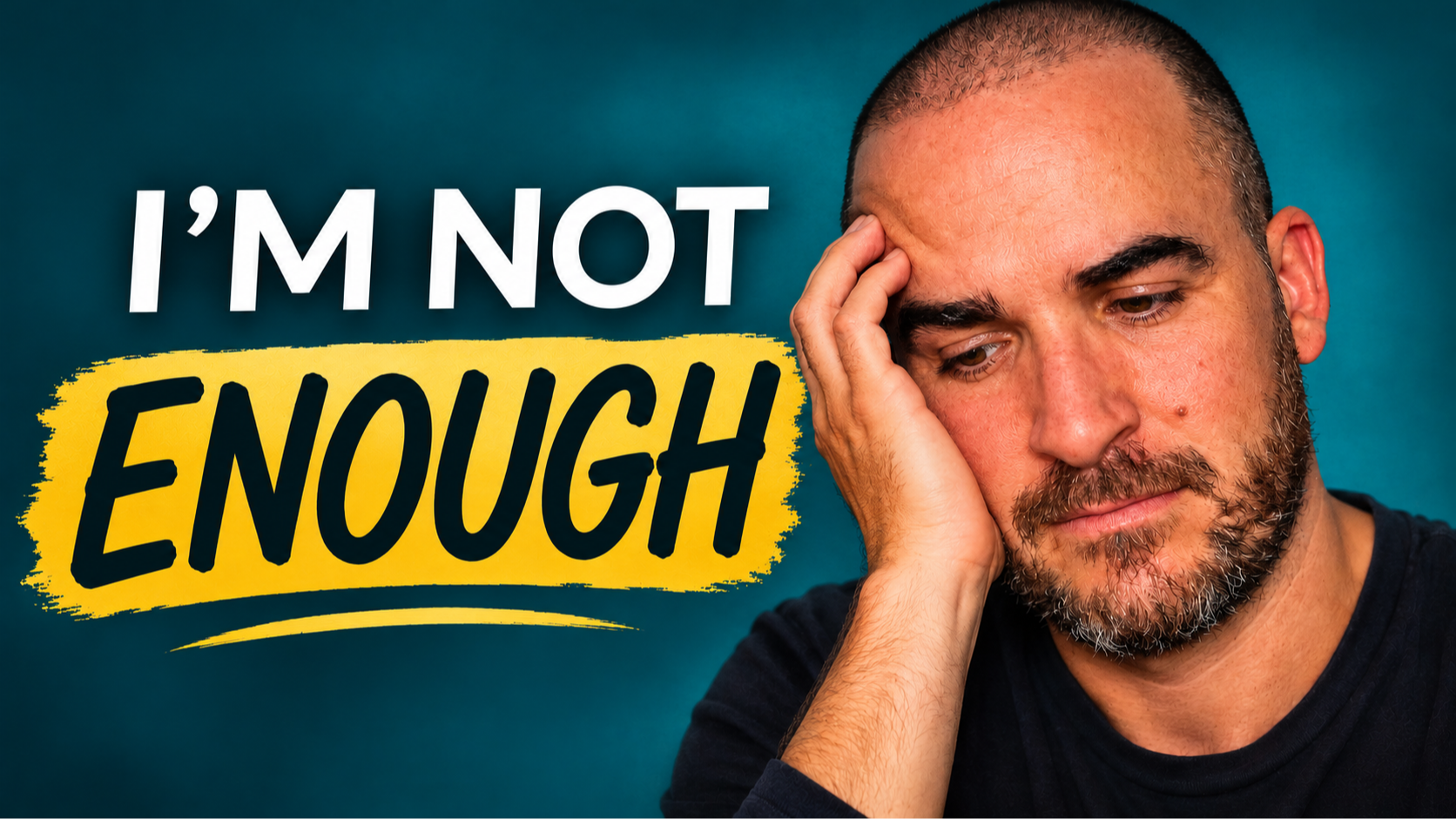
This article is based on a video from the Hope for Dystonia YouTube channel.
This is a tender topic for me. I don’t usually get teary-eyed when I record these videos, but this one reached me, because so many of us have internalized the belief that we need to mask who we really are, and we carry that mask through life. Healing shame is not about finally becoming a person you are not ashamed of. It is about loving the person who was always here all along.
If you’ve been trying to heal from dystonia, there is a good chance you’ll recognize something in what follows. I want to talk about toxic shame, and the hidden connection between it and the chronic dysregulation at the root of dystonia. We’ll go through three points: some myth busting about how shame and dystonia connect, what is really going on in your nervous system, and ways you can begin to relate to yourself differently right now.
Watch the Full Video
Shame vs. Guilt: What Is the Difference?
Isn’t it sometimes good to feel bad about something we did? Yes, it is, and that is exactly why the difference between guilt and shame matters.
- Guilt says, “I did something wrong.” So I can fix it, make amends and commit to changing my behavior. It is workable.
- Toxic shame says, “I am wrong.” There is something wrong with my very being. That feels unworkable, as if there is no escape.
So many of us carry this around for our entire lives, more or less consciously trying to prove that we are worthy of love, worthy of belonging, capable, not too much, enough.
Isn’t Dystonia a Muscle Problem?
Dystonia shows up in the muscles, but its roots lie in many factors that interact together. Very often one of those factors is chronic psychological and emotional dysregulation: a dysregulation of the nervous system that keeps us outside the window where we can breathe naturally between sympathetic engagement and parasympathetic relaxation.
We learn to live in constant, excessive sympathetic activation, or in freeze, or oscillating between the two. Toxic shame is one of the ways we learn to live outside that window of regulation. And this learning usually happens early, from our families, our peers, our teachers. We pick up the message that something is wrong with us: that we are too much, or not enough, or bad until we prove we are good enough.
Two Stories: The Mask We Wear
One client I worked with had Meige syndrome, with blepharospasm in her eyes and painful contractions in her face and jaw. She also lived with social anxiety and a deep sense of being excessive in everything: too emotional, too sensitive, too intelligent, noticing patterns too much.
She spent much of her life trying to prove she was acceptable. Toxic shame was the anchor around which everything else was organized. She performed calmness. She performed competence. And lo and behold, it never worked. Every time she accomplished something, she found a new reason she was secretly still messed up and unlovable, and a new fear that if people really knew her, they would leave. The stress was so constant she could no longer remember what it felt like to live without tension.
Her healing began when she started bringing love, in a very specific way, to the places that needed it. I’ll describe that below.
I think many of us have internalized the belief that we need to mask who we really are, and we go through life continuing to wear that mask. This kind of wound deserves lots of love, attention and care. This is a tender topic, and I hope we can relate to these wounds in exactly that way, you and I together.
What Is Really Going On: Dystonia Is Like a Storm
Dystonia is an emergent phenomenon, like a storm. What causes a storm? The evaporating water, the humidity, the wind, the electricity, the rotation of the earth? None of those and all of those. A storm is what happens when different factors come together and the system organizes itself the best way it can.
The same is true of dystonia. Is it the genetics? Developmental trauma? What we were told as children? TMJ imbalances? Repetitive use of a limb from playing an instrument or running? None of these, and all of these. Dystonia is what happens when the body-mind organizes itself as best it can, given the inputs it has been exposed to.
Chronic shame is part of the organization we default to when we receive certain messages growing up, or not enough of the messages we need to hear. That shame becomes one reason for chronic dysregulation. Then we may layer on an injury, an occlusal or TMJ imbalance, or repetitive tension in a limb. And usually there is an event that is the straw that breaks the camel’s back, where the nervous system is overwhelmed beyond its capacity. That is when the symptoms of dystonia appear.
What Can You Do About It?
If the storm developed through specific inputs, then we need to provide new inputs that allow the system to organize itself differently and bring back more sunshine.
I am not talking about affirmations and mindset work. Affirmations can help point your attention in a new direction, but you cannot hammer worthiness into yourself when something deeper is going on. The work I mean leads to your inner child actually experiencing what it is like to be delighted in.
In the Self-Healers Academy we work with Embodied Attachment Integration: helping our little one within, and ourselves as adults, experience the things we did not experience enough of growing up. That helps the nervous system organize differently around regulation. One of the qualities we need in order to develop resilient nervous systems is delight, an unconditional appreciation of our essence, of who we are. It is what we feel when someone appreciates us not for what we do, not for how we are useful, not for how we look.
When we learn to be that loving presence for ourselves, through the ups and downs, the mistakes and the successes, the wounded parts within us trust a little more each time that it is okay to let go of the constant need to prove ourselves and to guard ourselves from the gaze of others. These repeated experiences are what allow trust to emerge.
The upcoming free workshop goes deeper into exactly these patterns — the people pleasing, the hypervigilance, the freezing — and you experience a new way of relating to yourself and to the wounds behind them. It’s Dystonia Myth Busting: The Five Patterns I Rewired to Get My Life Back, on Sunday, November 15, 2026 · 12:00 PM EST / 9:00 AM PST / 5:00 PM GMT. Save your spot here →
Healing Shame Is Not About Fixing Yourself
Here is the one thing I most want you to take away. It is not about fixing your dystonia so that you finally look normal. It is about loving the wounded parts within you that believe tension and guarding are necessary. Loving them so much that, little by little, they trust that the guarding is less and less needed. And developing a new way of being you that is not organized around shame and guarding.
A Short Practice to Try Now
This is just a taste, and we go deeper in the workshop and in the Academy. Take it easy: tender material can come up.
- Think of an instance when you felt shame. Choose something manageable, not overwhelming.
- Notice what it feels like in your body. It might be warmth or heat rising in your face, a contraction in your chest, tightness in your stomach or throat, or tears behind your eyes.
- Don’t try to fix it. Stay with it. You can close your eyes if that helps.
- Relate to what is coming up with lots of care. It is a friend, a messenger trying to show you what within you needs love.
- Imagine your future, higher self: the one who took all the suffering of dystonia, shame and dysregulation and turned it into fertile ground for growth, so the heart could expand in its capacity to love.
- Imagine how that future self is looking at you right now, with eyes full of tenderness, love and care. Notice how well they understand what you are going through, and how this very time in your life is helping you grow.
- Notice that there is no judgment, only tenderness and appreciation for your humanity, exactly as you are right now, not because of what you do or don’t do, not because of anything you need to prove. Even with the things you feel are shameful and need to be hidden: you belong, and you are loved, just as you are.
- Let that in and feel how your body responds. When you are ready, open your eyes and notice that this loving gaze is still here. You can reach it whenever you want.
You can cultivate this relationship with your future, higher self. If it speaks to you, you can feel it as an expression of God’s love, or build a version of this figure that works for you. Returning to it regularly is how you cultivate the trust that lets your system relax more and more.
If tender material comes up, talk about it with friends, family, loved ones or your therapist. Joining the Academy is another excellent way to get support.
Related reading: Narcissists, Empaths, and Dystonia: The Hidden Connection
Your Next Steps
You deserve to get better, and the parts within you that are hurting deserve to be heard, loved and taken care of. You don’t need someone to fix you from the outside. You don’t need a savior. You can begin to learn how to relate to yourself differently, and this is where it starts. Two free resources pick up exactly where this article leaves off:
1. The free Dystonia Recovery Kit. Invaluable information that I wish somebody had shared with me when I was going through the thick of it.
2. The free workshop. Myth busting, and real work on the deeper patterns behind dystonia: the people pleasing, the hypervigilance, the freezing. It can be one of those moments with a before and after.
Prefer to go deeper live? Save your spot in the free workshop →
Dystonia Myth Busting: The Five Patterns I Rewired to Get My Life Back
Sunday, November 15, 2026 · 12:00 PM EST / 9:00 AM PST / 5:00 PM GMT
No cost, no catch for the Kit and the workshop, just a new way of understanding your body and yourself. And if you want ongoing support, the Self-Healers Academy is an excellent place to work on this with others. Much love to you.
I got my life back, and so can you.
