Narcissists, Empaths, and Dystonia: The Hidden Connection
Oct 29, 2026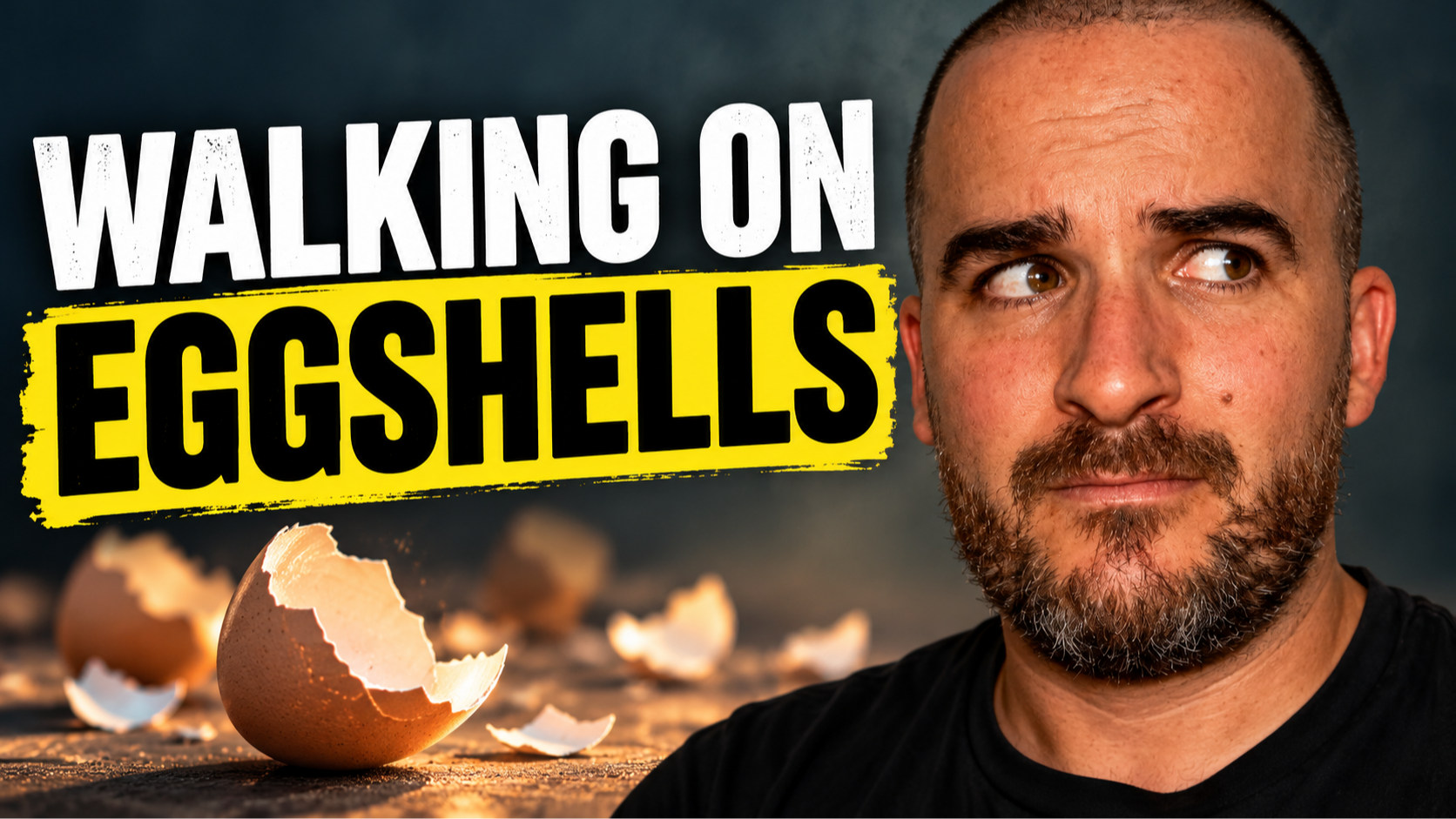
Narcissists, Empaths, and Dystonia: The Hidden Connection
This article is based on a video from the Hope for Dystonia YouTube channel.
I've been in a relationship with a narcissist myself, and it was one of the most difficult experiences of my life. It took me a while to understand that the dynamic wasn't only about him. It was a dance, driven by trauma on both sides, and the part of me that kept dancing was the same part that kept my nervous system on guard in other areas of my life.
If you've been trying to heal from dystonia, there's a good chance you'll recognize something in what follows. I want to talk about two personality types, the narcissist and the empath, and the hidden connection between the dance they get into and the chronic dysregulation at the root of dystonia. This isn't only relevant to dystonia. It applies to many neuroplasticity conditions, including functional neurological disorder (FND), so even if dystonia isn't your label, this may have something for you.
We won't be painting narcissists as the bad guys and empaths as the sensitive victims. The picture is more complex, and it recognizes everyone's humanity. Let me start with a couple of definitions.
Watch the Full Video
What Is a Narcissist?
Someone with high narcissistic traits has very often had some kind of injury to their sense of self while growing up. Underneath the bravado, the grandiosity and the entitlement, there is usually deep insecurity, shame, a sense of being insignificant, and a feeling of not being able to influence anything. It's a very miserable place to be.
It's also important to recognize that we all have narcissistic traits in one way or another. We're all on some kind of spectrum.
A narcissistic person is fundamentally a wounded person who has found one specific strategy for working with that insecurity. It can express itself as:
- Grandiosity: entire stories, entire "mythologies," built around themselves to preserve their self-esteem.
- Control: making sure the other person doesn't leave.
- Vulnerable narcissism: "Poor me. I've been through all of these things, so I'm entitled to your time and your efforts." You're not allowed to put yourself first. You need to take care of them before you think of yourself, if at all.
Both the grandiose and the vulnerable narcissist have a way of making it all about themselves.
What Is an Empath?
The way I use the term, an empath has two characteristics.
The first is an exquisitely sensitive nervous system, one wired to receive a lot more information with a lot less filtering than the average person. You might be more sensitive to noise and smells, and you might walk into a room and immediately feel its temperature: how everyone is showing up, and what emotions and dynamics are at play.
The second is that, over time, this sensitivity may have become a survival strategy. Perhaps you grew up with parents who weren't always emotionally stable, or in an environment that required you to be vigilant about what everyone was feeling. You learned to read everyone, to dissect every mood, every sentence and every facial expression, because your emotional safety depended on it. Your ability to relax, to exhale for a little while, depended, or so it felt, on everybody else being calm and having what they needed.
Here's the trap: when a sensitive nervous system is turned into a survival mechanism, it becomes automatic. It stops being something you choose. You're simply flooded with everyone's moods, emotions and "psychic material," and it overwhelms you. And being an empath doesn't exclude having narcissistic traits, or the other way around.
If you're on a healing journey, the best first step is the free Dystonia Recovery Kit, the information I wish someone had shared with me when I was in the thick of it. Get it free here.
The Dance Between the Two
This is where the "trauma-driven dance" comes in. A person with narcissistic traits looks for someone, subconsciously or consciously, who will willingly cater to their needs, be attentive to their moods, protect their fragile self-esteem, and walk on eggshells so their sense of self is never destabilized.
The empath often ends up being the willing partner: the one who has learned to be attentive to everyone's moods, to avoid stepping on anyone's toes, to keep the peace and never upset anyone.
The way it turns destructive and poisonous is through control. The narcissistic partner can give love while the empath caters to every need and goes along with the mythology ("you're so great at this, you're so smart"), and withdraw that love when the empath has to assert a need, voice a different opinion, or apply a boundary. It ends up being a kind of training. The empath slowly finds themselves backed into a corner and wonders, "How did I paint myself in here? How do I get out of this?"
The dance happens in a million different ways, so fill in the blanks for your own case. Both sides take part somewhat willingly, but it's really driven by each person's trauma. And if you recognize yourself in it, there is hope, because the healing it opens the door to is much broader than this one dynamic.
Why This Matters for Dystonia
Here's the important part. This kind of fawning, hyper-attunement and hypervigilance is a form of chronic nervous system dysregulation. It's a way the nervous system learned to stay outside its window of regulation in order to meet its fundamental psychological needs for safety, connection and self-esteem.
- If I need to cater to my partner's every fantasy about themselves in order to keep them calm and feel safe, I'll make sure I do it, and I'll stress myself out of my mind so they don't explode.
- If I need to do what they say in order to keep the connection, I'll keep checking whether I did everything I needed to.
- If I need their praise in order to maintain my self-esteem, I'll shape myself into the mold they want me to fit.
A regulated nervous system moves in a breathing rhythm between sympathetic engagement and parasympathetic relaxation. When we live this way, we're often stuck "up here" in constant sympathetic activation, looking for the next shoe to drop, or we freeze, make ourselves small and want to disappear. Sometimes we oscillate between the extremes.
That dysregulation shows up in the body as physical bracing: tension in the jaw, in the neck, and in the parts of the body we use to play an instrument or do some repetitive action. If there's an anatomical imbalance in the jaw, the occlusion, the neck or the cranium, that chronic tension gets mapped onto those asymmetries, which can contribute to the visible symptoms of dystonia. With FND, OCD and other conditions, overwhelm leads us to double down on defensive strategies, rituals and so on.
So the dystonia, or whatever neuroplastic condition you're dealing with, and the empath-narcissist dynamic are expressions of the same fundamental wound. The wound asks: can I meet my fundamental needs for safety, connection and self-esteem without chronically dysregulating myself? That's how we turn this around.
The upcoming free workshop goes deeper into exactly these patterns: people-pleasing and hypervigilance, plus a number of other patterns of chronic dysregulation I had to rewire to get my life back. It's Dystonia Myth Busting: The Five Patterns I Rewired to Get My Life Back, on Sunday, November 15, 2026 (12:00 PM EST / 9:00 AM PST / 5:00 PM GMT). Save your spot here.
Start With Sovereignty
The first step in turning this around is sovereignty, which we pay a lot of attention to in the Self-Healers Academy. It starts with learning to track ourselves, our own nervous systems. We want to notice when information, or the emotions of the room or the person in front of us, comes in and triggers a loop of emotion and thinking in us, and maybe a desire to fix, to control, or to make sure the other person is happy.
Noticing this is what gives us the freedom to choose. If I'm taken for a ride by everyone who's having a hard time, I live on a constant roller coaster. If I feel I have to fix everyone's problems before I'm allowed to relax, I'll never relax.
So the first step is to recognize: there's someone having a hard time. Can I open my heart to this person, and choose whether or not I go on that roller coaster?
In Buddhism, compassion is balanced by equanimity. Often we need to work on the equanimity piece, so that we don't just feel what the other person is feeling and get lost in it with them. Equanimity is the ability to have a little distance and not be taken for that ride, and it's what allows for freedom.
Open Your Heart to Yourself Too
How do we practice equanimity and sovereignty? By paying attention, and by opening our hearts not just to the person in front of us but also to ourselves, recognizing our own needs. If we need a break from an interaction, that's legitimate.
For the classic empath, this is often something we were never trained to do. So we learn to pause and ask:
- How am I doing?
- What am I feeling?
- Am I able to take this on, or am I being taken for a ride on that roller coaster?
- What do I need right now?
It's legitimate to say, "I appreciate what you're sharing, and I understand what you're feeling. I need to take a moment to resource myself." Or simply, "I recognize this is something hard you're going through, and I trust that you have the capacity to work with it and grow from it."
Whatever form of boundary you want to express, train yourself to understand that it's legitimate, then to express it, and see that the sky doesn't fall when you do. The more we recognize our own needs and apply those boundaries, the less vulnerable we are to situations like the trauma bonding of the empath and the narcissist.
These Patterns Are Not Forever
The more you can track yourself, understand your needs, recognize them as legitimate, act on them and apply the boundaries that take care of you, the easier it becomes to let go of the chronic dysregulation that keeps you "up here" or in freeze. And the easier it is to let go of the guarding in the body, to come back to your window of regulation, and to learn new things with your head and neck, or whatever part of the body dystonia affects.
This doesn't only apply to dystonia. Whatever you're trying to unlearn, whatever new thing you want to bring into your life, will be a lot easier once you're no longer living in chronic dysregulation. The sovereignty we've been talking about is what opens the door to the freedom you're searching for.
Related reading: Perfectionism, People-Pleasing, and Dystonia: The Hidden Connection
Your Next Steps
There are two free resources that pick up exactly where this article leaves off:
- The free Dystonia Recovery Kit. The foundational information I wish someone had handed me when I was in the thick of it.
- The free workshop. We go much deeper into these patterns, the handful I rewired to get my life back, on Sunday, November 15, 2026.
Start here: Download the free Dystonia Recovery Kit →
Want to go deeper live? Save your spot in the free workshop →
No cost, no catch, just a new way of understanding your body and yourself. And if you'd like to talk one-on-one, you can book a consultation with me.
Much love to you. If I did this, so can you.
