Musician's Focal Hand Dystonia: What Actually Helps | Hope for Dystonia
Aug 10, 2026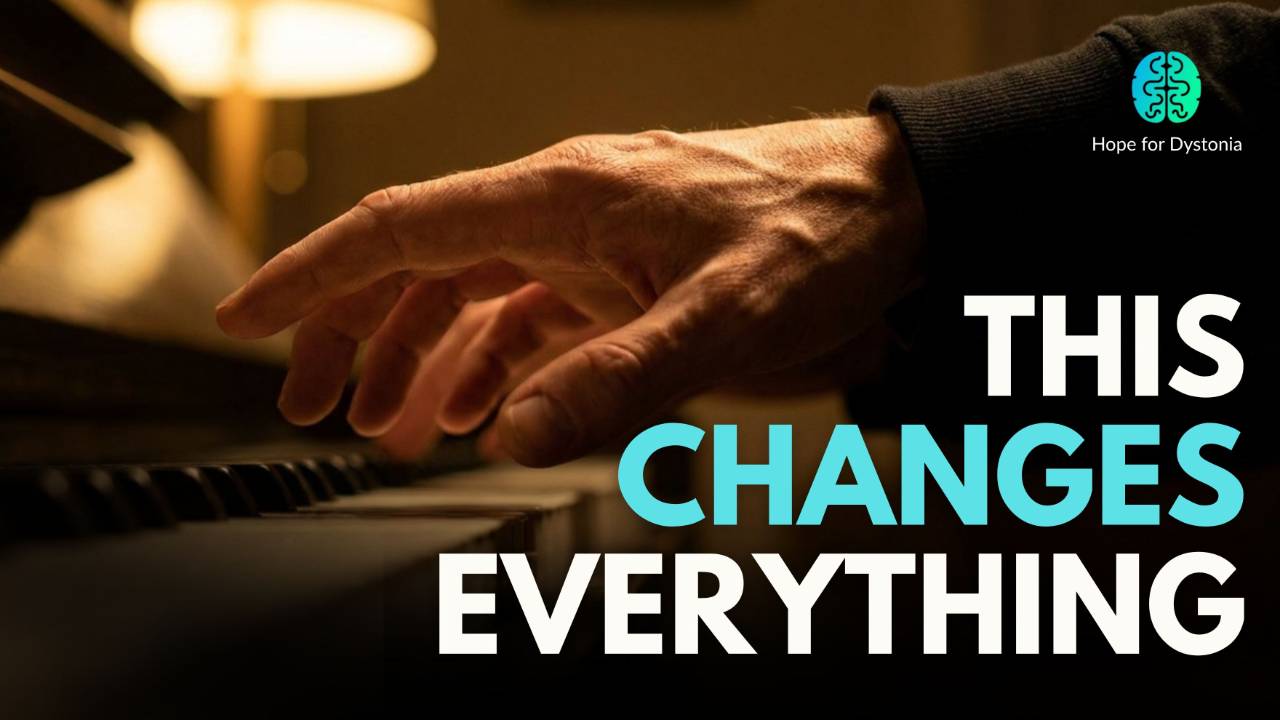
Focal Hand Dystonia in Musicians: Why Practice Won't Fix It and What Actually Helps
This article is based on a video originally published on the Hope for Dystonia YouTube channel.
If you're a musician dealing with focal hand dystonia—fingers curling or extending involuntarily when you play, losing control of individual fingers during complex passages—you've probably already tried the obvious solutions. Practice more. Target the hand with exercises. Work on technique.
And you've probably noticed: it doesn't work. In fact, it often makes things worse.
Understanding why conventional approaches fail—and what actually addresses the root of the pattern—can completely change your relationship with this condition and open doors to genuine recovery.
Watch the Full Video
Focal Hand Dystonia in Musicians: What Actually Helps
Why This Topic Matters for Musicians
This understanding is particularly relevant if you experience fingers curling or extending involuntarily when playing, notice symptoms only appear during musical performance (task-specific), have tried practicing through it without success, feel like you're losing control of individual fingers, have been told to rest but symptoms return when you play again, or sense there's more going on than just a "hand problem."
Focal hand dystonia in musicians is heartbreaking because it strikes at the core of identity. But understanding what's really happening—and what actually helps—offers genuine hope.
What Focal Hand Dystonia Looks Like
For musicians, focal hand dystonia typically shows up as involuntary finger curling (fingers want to close when you need them open), involuntary finger extension (fingers extend when you need control), loss of individual finger control (fingers move together instead of independently), task-specificity (only happens when playing, not in daily activities), and worsening with effort (trying harder makes it worse).
The condition is task-specific—meaning it happens when you play your instrument, but your hand works fine for other activities. This is a crucial clue about what's actually going on.
Why Conventional Approaches Fail
Most musicians try the obvious solutions first.
"Practice More"
The instinct is to work through it—to drill the problem passages until muscle memory takes over. Why it fails: You're not dealing with a technique problem. You're dealing with a brain-signaling problem. More practice just reinforces the faulty pattern.
"Target the Hand"
Hand exercises, stretches, physical therapy focused on the fingers and forearm. Why it fails: The hand is the messenger, not the source. The problem isn't in the hand—it's in the signals being sent to the hand.
"Technical Fixes"
Changing fingering, adjusting instrument position, modifying technique. Why it fails: While sometimes helpful temporarily, these approaches don't address the root cause. The pattern tends to reassert itself.
The common thread is that all these approaches assume the problem is local—in the hand, in the technique, in the practice. But focal hand dystonia in musicians is a whole-system pattern, not a hand problem.
The Real Understanding: It's Not a Hand Problem
Focal hand dystonia is fundamentally a brain-signaling issue. The brain is sending the wrong signals to the hand—signals that made sense at some point but are now creating dysfunction.
The hand is the messenger. Shooting the messenger doesn't solve anything.
What seems like a hand problem is actually a brain signaling problem. What seems like a technique issue is actually a nervous system pattern. What seems like something wrong with the fingers is actually the fingers responding to faulty signals. What seems like a local dysfunction is actually a whole-system expression.
This is why targeting the hand directly doesn't work. The hand is just doing what it's being told. The question is: why is the brain sending these signals?
The Three Areas That Actually Matter
Based on working with musicians with focal hand dystonia, there are three key areas that actually make a difference.
Area 1: Understand the Full Picture
Focal hand dystonia doesn't exist in isolation. It's connected to the whole body, the jaw, other cranial nerves, and your emotional relationship to playing.
The Whole Body: How is the rest of your body organized when you play? What's happening in your shoulders, neck, and trunk? Is there tension elsewhere that's contributing to the hand pattern?
The Jaw (Crucially Important): The jaw and hand are deeply connected neurologically. Jaw tension often accompanies and contributes to hand dystonia. Many musicians with focal hand dystonia have unrecognized jaw patterns.
Other Cranial Nerves: Multiple cranial nerves modulate motor control. Imbalances elsewhere in the system affect the hand. The hand is part of a larger neural ecosystem.
The Emotional Relationship to Playing: What does playing mean to you? What emotional stakes are attached to performance? How does your identity connect to being a musician?
Understanding the full picture means stepping back from the hand and seeing how everything connects.
Area 2: Map Your Hypertonic and Hypotonic Patterns
In any dystonia, there's an imbalance. Some muscles are hypertonic (overactive, working too hard, getting too much signal). Other muscles are hypotonic (underactive, forgotten, getting too little signal).
In the Hand: Which muscles are overactive? Which have "gone to sleep"? Which fingers are working too hard? Which are not participating enough?
In the Rest of the Body: Where else are you hypertonic? What parts of your body have you lost connection with? How does the imbalance in your hand reflect imbalances elsewhere?
The Principle: Instead of fighting the overactive muscles, wake up the underactive ones. Bring balance to the whole system.
Area 3: Reduce Performance Pressure
This is often the piece musicians don't want to hear—but it's crucial.
Focal hand dystonia in musicians is frequently linked to the emotional stakes of playing. When your identity is tied to being a musician, there's enormous pressure on every performance. Fear of judgment creates tension that manifests in the hand. The need to prove yourself leads to gripping, forcing, and over-controlling. Playing to meet expectations puts the nervous system in survival mode. High stakes on every note means the body responds to threat.
The Connection: When playing carries enormous emotional weight—when your identity and worth feel tied to your performance—your nervous system treats playing as a high-stakes, potentially threatening situation. And the body responds to threat with tension, guarding, and dysfunctional patterns.
What This Means: Reducing performance pressure isn't about caring less about music. It's about untangling your sense of self-worth from your playing. It's about making it safe to play imperfectly. It's about removing the threat so your nervous system can relax.
The Whole-System Approach
Putting these three areas together creates a comprehensive approach.
For the Full Picture, ask: What's happening in my whole body? My jaw? My emotional relationship to playing?
For Mapping Patterns, ask: Where am I hypertonic? Hypotonic? What's the imbalance?
For Performance Pressure, ask: What emotional stakes am I bringing? How is my identity tied to playing?
This is very different from "practice more" or "target the hand." It's looking at the whole system, understanding the patterns, and addressing the root causes.
What Recovery Can Look Like
Recovery from musician's focal hand dystonia is possible—but it doesn't look like what most people expect.
It's not fixing the hand through exercises, practicing until it goes away, or finding the right technical adjustment.
It is understanding the whole-system nature of the pattern, rebalancing hypertonic and hypotonic areas, addressing the emotional and relational aspects of playing, creating safety for your nervous system, and gradually rewiring the brain's signals.
The Timeline: This isn't a quick fix. Rewiring patterns that developed over years takes time. But with the right understanding and approach, genuine change is possible.
A Note on Identity
For musicians, focal hand dystonia strikes at the heart of identity. Playing isn't just something you do—it's who you are.
This makes the condition especially painful. But it also points to something important: the identity piece is often part of the pattern itself.
When your worth as a person feels tied to your playing—when "musician" isn't just a role but your essential self—then every performance carries life-or-death weight. And the body responds accordingly.
The Invitation: Part of healing may involve exploring: Who am I beyond playing? Can I exist without proving myself through music? What if my worth isn't dependent on my performance?
These questions aren't about giving up music. They're about making it safe to play. When your identity doesn't depend on perfect execution, your nervous system can finally relax—and that's when the hand often starts to free up.
Getting Started
If you're a musician with focal hand dystonia, here are some starting points.
Step 1: Step Back from the Hand. Stop targeting the hand directly. Recognize that the hand is the messenger, not the source.
Step 2: Get Curious About the Full Picture. Start noticing: What's happening in your jaw when you play? Your shoulders? Your breathing? Your emotional state?
Step 3: Map Your Patterns. Begin identifying: Which areas feel overactive? Which feel disconnected or forgotten?
Step 4: Explore the Emotional Stakes. Ask yourself: What does playing mean to me? What do I fear about not playing well? How is my identity tied to being a musician?
Step 5: Seek Appropriate Support. This is complex work. Working with someone who understands the whole-system nature of focal hand dystonia—not just the hand—can make a significant difference.
Key Principles for Musicians with Focal Hand Dystonia
It's Not a Hand Problem. The hand is responding to signals. Address the signals, not just the hand.
The Whole System Matters. Jaw, body, emotions, identity—all of these play a role.
Balance Over Force. Wake up underactive areas rather than fighting overactive ones.
Pressure Creates Tension. The emotional stakes of playing contribute to the physical pattern.
Identity Work Is Part of Recovery. Untangling self-worth from performance creates safety for the nervous system.
The Hope for Dystonia Method: Comprehensive Recovery
Focal hand dystonia in musicians responds to the same principles that apply to all forms of dystonia.
Cranial Nerve Understanding: Especially the connection between jaw and hand, and how multiple neural pathways contribute to the pattern.
Hypertonic/Hypotonic Mapping: Identifying what's overactive and underactive, and bringing balance to the system.
Nervous System Regulation: Creating safety so the body can release its guarding patterns.
Emotional and Relational Work: Addressing the identity and performance pressure aspects that contribute to the pattern.
Your Next Step: The Free Recovery Roadmap
If you're a musician dealing with focal hand dystonia—and you're ready to look beyond the hand to the whole-system pattern—we invite you to download the Hope for Dystonia Recovery Roadmap.
This free resource includes the eight steps of dystonia recovery, introduction to hypertonic/hypotonic mapping, overview of the Self-Healers Academy, and free preview of core exercises.
Download the Free Recovery Roadmap →
There's no pressure or urgency. Just an invitation to explore whether this approach—addressing the whole system rather than just the hand—feels right for you.
Your hand isn't the problem. And that's actually good news.