Cervical Dystonia: 3 Hidden Cranial Nerve Patterns | Hope for Dystonia
Sep 23, 2026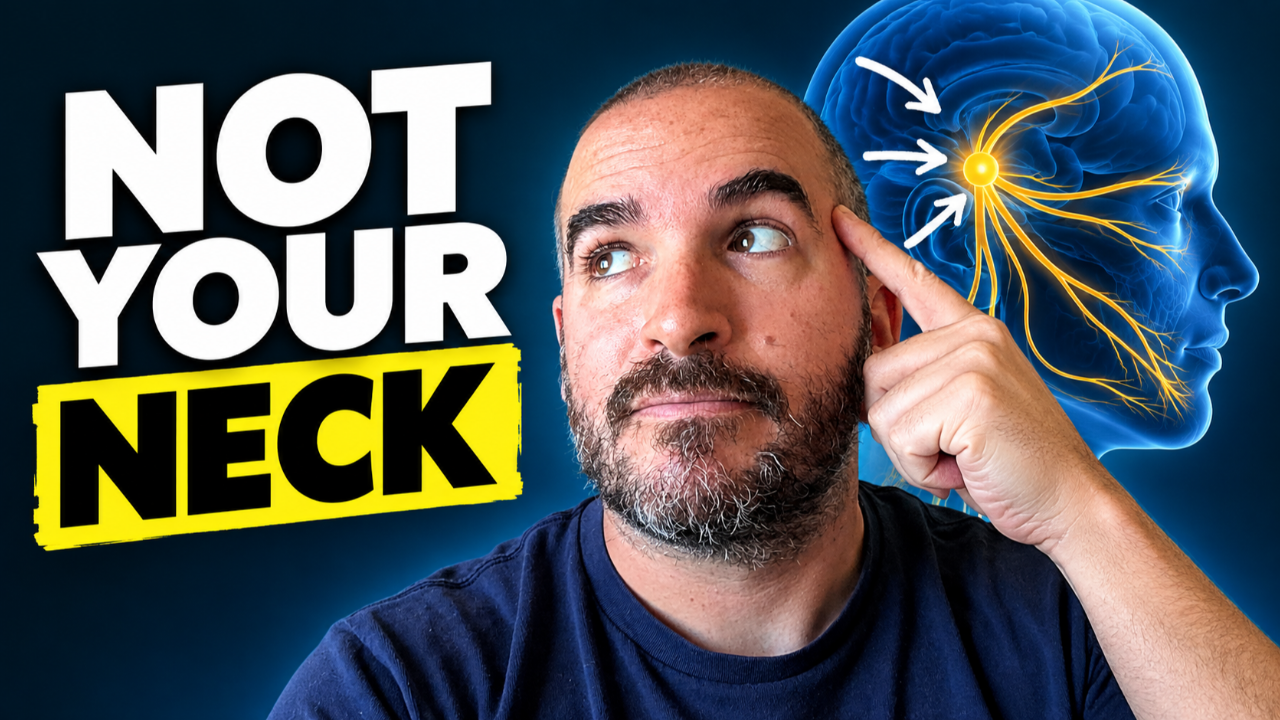
Cervical Dystonia: 3 Hidden Cranial Nerve Patterns in Your Neck
This article is based on a video from the Hope for Dystonia YouTube channel.
With cervical dystonia, the cranial nerves are doing some acrobatics: overfiring in some places, underfiring in others, and it can feel like you're stuck perpetuating the imbalance. But the truth is you're not really stuck. Once you realize which patterns you're repeating, you can decide to do otherwise. I got my life back this way, and so can you.
This one is a little more advanced. If you find yourself lost, I'd recommend starting with some of the more introductory cranial-nerve videos on the channel first. Here we're going deeper: the specific cranial-nerve patterns that show up in cervical dystonia, and three in particular that very few people talk about or understand, yet are crucial for turning it around.
Quick foundation: the cranial nerves are the fundamental pathways in the head and neck that help us perceive the world, regulate the body in response to the environment, and sense where we are in space. In cervical dystonia, they fall into an imbalance, overfiring here, underfiring there. The whole premise of the work is that once you know what's actually happening, you can stimulate what you've been underusing, let go of what you've been overusing, and create real change.
Cervical dystonia usually involves the eleventh cranial nerve, which drives some of the biggest muscles in the neck, turning and nodding the head. That one is the obvious place to work. But what I want to share are the three patterns of association between the eleventh nerve and other pathways, the ones that get overlooked. The third is the most important, so stay with it to the end.
Watch the Full Video
Pattern One: Cranial Nerve 10 (the Vagus) — Breath and Voice
Cranial nerve ten is the vagus nerve, and everyone seems to be talking about it. Today I want to focus on two of its functions that are especially relevant to cervical dystonia: it helps us breathe, and it innervates the throat, the voice, and the muscle tone of the soft palate.
Breathing first. A pattern that often shows up with cervical dystonia is that the breath becomes tied into the dystonia itself. Instead of breathing symmetrically into the belly, in a way that regulates and brings you back to center, you end up breathing in asymmetrical ways, engaging muscles that don't need to be involved. One version is breathing in a way that pulls a shoulder up toward the nose. Another is tightening the platysma, the sheet of muscle at the front of the neck, which feeds tension into the neck, sometimes symmetrically, sometimes not.
Then the voice and soft palate. When there's tension on the outside of the neck, there's very often tension on the inside too, in the throat and soft palate. When you learn to work with that inner tension, and with how you use the tenth nerve, you actually start to find more symmetry in the visible muscles of the neck as well. The same is true of the breath: as you learn to breathe better and unwind these misfiring associations, you undo some of the patterns that keep you stuck.
This is exactly why knowing your specific map matters. In the Academy, the work sounds like: "I can see my seventh nerve is involved in my platysma, and a shoulder that wants to pull up when I breathe. On my tenth nerve I tend to favor the left. So how do I wake up the sleepy right side, and use ice and other tools to teach my brain it doesn't have to fire the things it's learned, and to use the things it's been forgetting?" That's the difference between repeating exercises blindly and repatterning proactively, in a way specific to you. From my own experience and that of many people I've worked with, this makes all the difference.
Pattern Two: Cranial Nerve 12 — the Tongue
You'd be surprised how much the balance of muscle tone in your tongue influences the balance in your neck. The neck, tongue, and jaw don't live in separate silos, the whole cranio-cervical-mandibular complex works together, dynamically, to maintain an equilibrium.
What you often see in cervical dystonia (not everyone, but many people) is an imbalance in the muscle tone of the twelfth nerve and the tongue. Sometimes it's obvious: licking the corners of your mouth is harder on one side than the other. Sometimes it's subtler: suctioning the tongue up to the palate is harder on one side, or the tongue simply rests slightly off-center, a little to the left or right. For me it was dramatic, a massive tongue thrust to the left, so my tongue sat permanently over there. It took a long time to understand and repattern, because the exercises I was given weren't specific to my imbalance. They assumed both sides of the tongue could do the same things, and nothing could be further from the truth.
Once you wake up and stimulate the sleepy side, you can suddenly hold more symmetrical tone in the tongue, gently suctioning it up so the tip rests just behind your incisors, and that begins to help the neck find symmetry too. At first the change might be tiny. Or it might be the moment you notice, "my tongue is way over here, but if I activate the sleepy side and bring some tone back, slowly my neck finds more balance as well." Don't worry if it doesn't happen right away, it takes time.
Pattern Three: Cranial Nerve 5 (the Trigeminal) — the Jaw
This is the most crucial one, and still one of the most overlooked. Cranial nerve five, the trigeminal, as it relates to the jaw and chewing. The position of the jaw, and how the condyles sit in the temporomandibular joint, has a profound impact on the muscle tone in the neck.
Plenty of people with cervical dystonia have some imbalance here. Some have clicking and a TMJ-disorder diagnosis; some don't. Some simply have teeth missing on one side, or had dental and orthodontic work that left them worse off, overusing one side of the mouth at the expense of the other. From there, a whole cascade of compensations follows, the neck develops its own imbalances, the upper cervical vertebrae can misalign, and the brain performs endless acrobatics just to keep a semblance of coherence.
So what do we do? In the Academy, you learn to map your fifth nerve in three dimensions, understanding where your nervous system actually wants your jaw to sit, in pitch, roll, and yaw. As you bring the jaw closer to that position, the neck responds, and it gets easier to hold good tone and symmetry. We start with simple things, popsicle sticks, paper towels, wax, chewing gum, just to build awareness of what this is about.
And if needed (not everyone needs this), you can go to a dentist and, with sovereignty, guide them through what your nervous system wants, so they can use their skill to respond to it. It sounds like: "When I have a little more space in the back, or a different pitch of the jaw, I get relief, so can you help me create an appliance for that?" Or, "I tend to forget the right side because teeth were removed there, and when I have more contact on the right I can engage that side of my jaw and neck, so can you help me create that?" I'm simplifying, but the point is that you lead, from an understanding of your own body.
The Real Takeaway: You Have Agency
The thread through all three patterns is this: you are not just a victim of what your cranial nerves are doing. When you can feel into your body and say "holy moly, my body responds to different inputs, and I can actually make sense of what's happening," everything changes. It stops being a mystery. You have power. You have agency. You can learn a new way of being you. If I did this, and if all the people in the testimonials did this, you can too.
Your Next Steps
Two free resources pick up exactly where this article leaves off:
1. The free workshop. A beginner's cranial-nerve mapping practice — the very thing described here — done together with others walking a similar path.
2. The free Dystonia Recovery Kit. Information that will change how you understand your situation and empower you to turn it around.
You can also join us and ask questions, no question is off limits, and we'll see if it's a good fit for you too. In the meantime, much love to you.
If I did it, so can you.