The Relational Turn: The Most Important Thing in Dystonia Recovery
Jun 15, 2026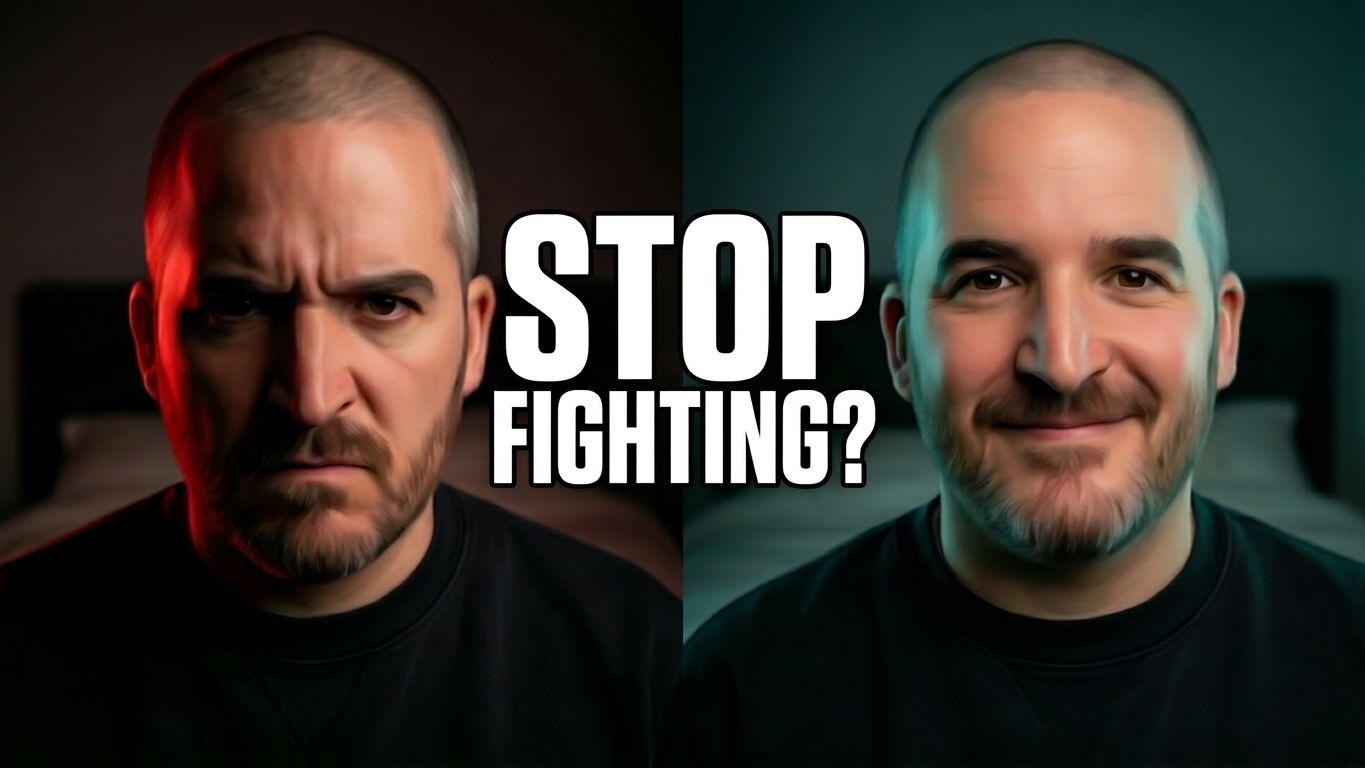
This article is based on a video originally published on the Hope for Dystonia YouTube channel.
Today I want to talk to you about something really important. Perhaps the most important thing in the whole Hope for Dystonia method.
The one thing that allows us to move from being at war with the body to actually finding peace.
I'm talking about the relational turn.
Watch the Full Video
The More I Fought My Body, The Worse It Got
What Is the Relational Turn?
The relational turn is the moment when we stop treating the body as the enemy.
It is the moment when we stop trying to fix the body. When we stop trying to impose something on the body. When we stop thinking of the body as an object that we possess and need to beat into shape.
And we start realizing that this is the body that we are.
We start relating to the body with:
- Curiosity
- Care
- Compassion
- Presence
Everything Changes
When we bring that curiosity, when we bring that care—everything changes.
We move from a situation where we are trying to find equilibrium and symmetry through suppression...
To a state where we bring equilibrium and symmetry and good muscle tone through relationship.
When we do that, the sky's the limit.
The Foundation of the Hope for Dystonia Method
The whole Hope for Dystonia method is built on this—on relationship.
The questions become:
"Can I stop trying to treat my body as an enemy? As a foreign object that I possess, that I need to control?"
"Can I start realizing that the body is expressing something deep about me—about my wounds, about the patterns of guarding that I have learned?"
"Can I start relating to those wounds seriously?"
"Can I bring love where things hurt—so that I can let go of the patterns of guarding in the first place?"
What 99% of People With Dystonia Do
This is completely different from what 99% of people with dystonia out there do.
The Alien Approach
They think of dystonia as this alien kind of phenomenon that has taken over their bodies. They try to fix this phenomenon. They try to get the alien out. They try to suppress the body into some sort of configuration that they will like better.
And that obviously doesn't work.
Because we can only suppress so much. At a certain point, the pattern of guarding is going to show up in a different way.
The Exercise-Only Approach
It's also different from what people do when they try to solve dystonia through a million exercises.
Yes, exercises have their place. In a lot of cases, they can be beneficial. In my experience, in cases that are relatively simple, they can get us far.
But when we are looking at something more complex—which is the vast majority of people I encounter—when we are looking at:
- Layers of wounding from when we grew up
- All kinds of things that happened during our lifetimes
- Anatomical imbalances—maybe in the TMJ, in the occlusion, in the neck
Then just exercising our way out isn't going to get us where we want.
We need to start really listening. We need to start really relating.
How I Got My Life Back
If you're familiar with my channel, you've heard me tell this story a couple of times already.
There was a time when I found it difficult to speak, to chew, to walk. I was in and out of bed continuously—for years. Sometimes I would have entire stretches that lasted months when I couldn't really do much other than be in bed and watch my own thoughts.
The War I Was Fighting
I was really angry. I was frustrated. I was depressed. I was sad. I was anxious and afraid.
And I tried to white-knuckle and power my way through this—trying to force myself to do the things that I wasn't able to do anymore.
Obviously, it didn't work.
Then I tried all kinds of Western medical approaches and medication. It wasn't getting me anywhere.
The Moment Everything Changed
Everything changed when I gave up.
So to speak. That's the word I use to describe my approach.
At a certain point, I even used to say this to clients. I had two rules for our work together:
- Don't believe anything I say. Verify everything in your own experience. Tell me if it actually resonates, if it actually helps.
- Give up. Meaning: surrender.
Nothing really changed for me—and really, for the people I've had the incredible fortune to work with—until we gave up. Until we surrendered.
The Conversation With Dystonia
Coming back to my story, I really had to say:
"Hey, I understand that I'm not going to overpower you."
"And you are actually me. This is not something coming from the outside."
"You, dear dystonia, are trying to tell me something. You're trying to point my attention to the parts of me that hurt."
"With this understanding, I want to start listening. I want to start understanding what those places of hurt are."
"I want to be an ally. I want to help. I don't want to be an enemy and pretend like nothing is there."
"I don't want to continue to suppress. I don't want to continue performing. I don't want to force myself to pretend like I can work when I couldn't."
The Humility Required
That was tough.
Because it took some humility. A lot of humility, actually.
I had built my entire persona at the time on being able to be an overachiever.
I was studying full-time. I had a job in the evenings, sometimes even at night. I also had an internship on the side. A zillion things at once.
And I kept going with that for a long time.
The Body Said No
At a certain point, my body was just saying: "Hey, this is not going to work anymore."
And I had to ask myself: "Okay, well if I'm not the overachiever—if I can't keep suppressing things—then who am I?"
The Gifts of the Relational Turn
Gift One: Finding What's Real
That was one of the gifts of the relational turn—being able to say: "Hey, there's something more real underneath."
Underneath all of the compensations and the stories. The ways I learned to suppress. The ways I tried to look a certain way.
Gift Two: Unlearning Dystonia
Perhaps the biggest gift of the relational turn was being able to unlearn my dystonia.
Being able to learn to work with both sides of my body. Being able to chew and speak and walk again. Being able to do all kinds of things that seemed impossible.
I always give the example of me kayaking back in Canada—for 12 kilometers each time—and feeling like: "Wow, this would have been unthinkable."
With the instability I felt in my neck, in my jaw, in my arms... And yet I can now do these things.
And it all started from this simple turn:
"What is actually needed here? Can I start listening?"
"Can I realize that I'm not going to find a new way of being, a new way of inhabiting my body, by suppressing what is there?"
"I am instead going to rebuild things from the most fundamental layers."
What Got Rebuilt
I got to rebuild my self-image, my self-esteem, my self-worth—as I was hinting at earlier with the story around "who am I if I'm not the overachiever?"
I got to rebuild the way I inhabit my head and neck and my body more broadly.
I got to become more and more who I really am.
Because I started listening. And I found peace in my body—more and more so each day that passes.
Not by suppressing. But by listening.
A Byproduct
It was almost like a byproduct, if I'm honest with you, looking back.
Because this was about so much more than unlearning a certain pattern of spasming.
This was about finding a whole new way of being who I am—being more and more authentically me.
The Technical Work Still Matters
Of course, that came with everything else I talk about in my videos—everything else we work on in the Academy:
- Understanding how to balance the cranial nerves
- Understanding how to bring balance to the occlusion
- So much more
All of those things are really important.
But There's a Catch
None of them work if we are coming at it like resentful, angry technicians trying to fix a broken body.
That is not who we are.
If we do that, nothing is going to stick.
The Academy is built around helping us relate to ourselves, to our bodies, differently—and rebuilding from there.
Suppression vs. Relationship
The Suppression Approach
|
What It Looks Like |
Why It Fails |
|
Treating body as enemy |
Creates more tension and guarding |
|
Trying to "fix" the body |
Body isn't broken—it's expressing something |
|
Imposing solutions |
Ignores the underlying wounds |
|
White-knuckling through |
Can only suppress so much |
|
Forcing function |
Pattern shows up somewhere else |
|
Angry technician mindset |
Nothing sticks |
The Relational Approach
|
What It Looks Like |
Why It Works |
|
Body as self, not object |
Creates safety for change |
|
Curiosity about what body is expressing |
Addresses root causes |
|
Listening to wounds |
Allows letting go of guarding |
|
Surrender and humility |
Opens door to real change |
|
Being an ally |
Body can trust and release |
|
Bringing love where it hurts |
Disentangles the knots |
The Two Rules
If I could distill this into two rules for working with dystonia:
Rule 1: Don't Believe—Verify
Don't believe anything I say. Verify everything in your own experience. Tell me if it actually resonates, if it actually helps.
Rule 2: Surrender
Give up the war. Stop trying to overpower. Recognize that dystonia is you—trying to tell you something, pointing to the parts that hurt.
Be an ally. Start listening.
The Journey From War to Peace
FROM:
- At war with the body
- Dystonia as alien invasion
- Suppression and force
- Overachiever identity
- White-knuckling through
- Equilibrium through control
TO:
- Peace in the body
- Dystonia as messenger
- Curiosity and relationship
- Authentic self
- Listening and surrender
- Equilibrium through relationship
Your Next Step: The Recovery Roadmap
If this understanding of the relational turn resonates—if you're ready to stop the war and start listening—we invite you to download the Hope for Dystonia Recovery Roadmap.
This free resource provides:
- The complete framework for understanding dystonia as expression, not invasion
- How to make the relational turn in your own journey
- The path from suppression to relationship
- Introduction to the Self-Healers Academy approach
- Tools for beginning to listen to what your body is expressing
Download Your Free Recovery Roadmap →
This can begin to give you a taste of a different way of relating to yourself—a different way of befriending what is going on.
Final Thoughts: The Body Is Not the Enemy
The relational turn is perhaps the most important thing in dystonia recovery.
It's the moment when we stop treating the body as the enemy. When we stop trying to suppress, fix, control, impose.
When we start realizing: this is the body that I am. And it's trying to tell me something.
I was angry. Frustrated. Depressed. Anxious. I tried to white-knuckle my way through.
Obviously, it didn't work.
Everything changed when I surrendered. When I said: "I understand I'm not going to overpower you. And you are actually me. What is it that you're trying to show me?"
That's when the listening began. That's when the healing began.
Not by suppressing—by relating. Not by force—by curiosity. Not by war—by peace.
The body is not the enemy. It never was.
And when we truly understand that—when we make the relational turn—the sky's the limit.
Ready to stop the war and start relating to your body with curiosity and care? Download the free Hope for Dystonia Recovery Roadmap and discover the framework that makes lasting change possible.
Download the Free Recovery Roadmap →
This is information I wish someone had shared with me when I was in the thick of it—searching for neck exercises, trying harder and harder, not understanding why nothing was working.