Have You Been Lowering Your Expectations? When Dystonia Becomes Your Identity
Jun 08, 2026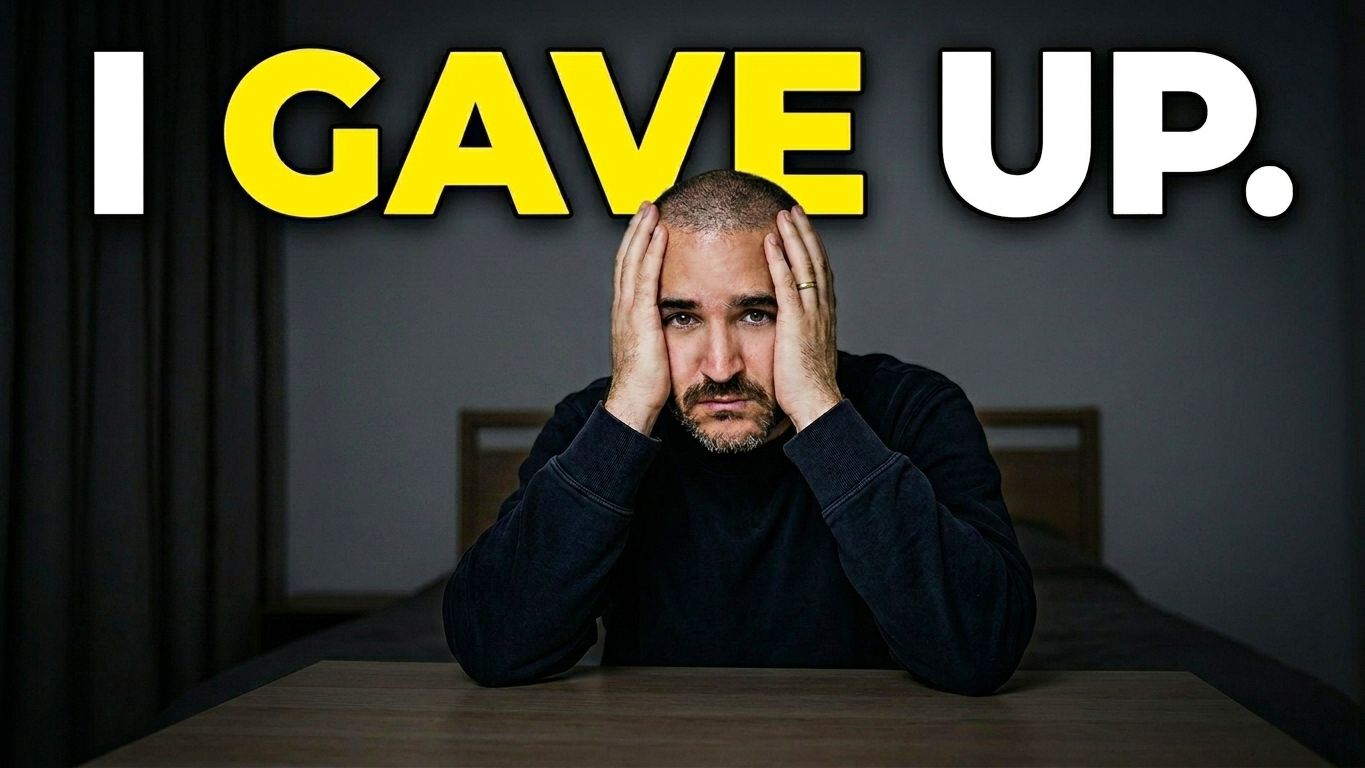
This article is based on a video originally published on the Hope for Dystonia YouTube channel.
Have you been lowering your expectations?
Have you been slowly slipping into the belief that this is who you are right now—that there is nothing to do, and you might as well accept that there is no hope?
Today I want to reflect on an aspect of our experience with dystonia that is not talked about very much, but that is actually crucially important.
It has to do with our identity.
Watch the Full Video
Have You Started Lowering Your Expectations?
The Saddest Aspect of Dystonia
One of the saddest aspects of dystonia is that, in addition to the physical limitations, we have all kinds of ways in which we shrink our lives.
And these end up being not just limitations that are physical. They're limitations that are wired into our identity.
Examples From My Own Life
When I had dystonia and it was at its worst—when I really had a hard time functioning—in retrospect I can see how I was really turning it into an identity.
"I'm Just Not the Type Who Enjoys Long Conversations"
If I had a hard time speaking, I would end up saying things like:
"Yeah, I'm just not the type of person that enjoys long conversations. I'm more of a silent type. I like to meditate."
Yes, I did like to meditate. But I also liked to talk. I just didn't like being in pain when I did that.
"I'm More of a Homebody"
"I'm more of a homebody. I don't like going out very much."
Yes, I am more of a homebody. But I also enjoy long walks in nature, exploring cities, adventure.
When my dystonia made it really hard to walk, I had become the person that just doesn't want to go out, just doesn't enjoy that, it's just not part of who I am.
The Shrinking Person
The person that I was was shrinking more and more because I could do less and less.
But instead of viewing these limitations as something that was passing, as something I could work on, as an expression of pain and guarding in my body—I was looking at these things as just the way I am.
"This is baked in and wired into who I am."
"There's something just fundamentally wrong about me. There's something just fundamentally broken."
When Limitations Become Identity
When the limitations of dystonia become an identity, we become fused with them.
They feel like a prison.
What This Looks Like
I've seen versions of this with clients left and right:
Physical limitations becoming identity:
- "If I have a hard time walking, then I stay at home"
- "If I can't drive, I reduce the radius of where I can operate and function"
Visible symptoms becoming identity:
- "If I have visible symptoms and I'm embarrassed by them, I just become the kind of person that doesn't enjoy connecting with others"
- "I'm not able to meet new people"
- "I'm not able to work and be out and about in the world"
The Painful Part
Maybe your visible symptoms would allow you to be a real estate agent. Maybe they would allow you to be a programmer. Maybe they would allow you to have a fulfilling professional life.
But you're so embarrassed by the symptoms that you just become the kind of person that is incapable of doing those things.
The Sneaky Story of Hopelessness
This is painful because it's sneaky. We don't realize that we're doing this.
But actually, that hopelessness—that story that we have to lower our expectations, that we can't ever get better—that story ends up having a life of its own.
We end up organizing our identity and our days around those same stories.
This Is Not the End of the Story
What I want to tell you is that if this is you, this is not the end of the story.
Even when these identities and these stories feel profoundly wired into who you are—there is hope.
Dystonia Is Learned
Dystonia, in most cases, is something that is learned. In every case, it has an element of neuroplasticity—of something that is learned.
And if there is that element, then you can get better.
Because you can unlearn that. And you can learn something new.
The Huge Relief
It is hard to really take that in. It is hard to really imagine that possibility when things have been a certain way for a long time.
But here's what can shift everything:
"My body can actually try something new."
"My body can actually have a different experience."
"My body can engage a different pattern in the nervous system."
And if my body can do that, then maybe this is not a matter of who I am. This is a matter of what I do.
That is a huge relief.
Because if this is what I've learned to do, I can learn to do something different.
Why We Learned What We Learned
There's a reason why we learned what we learned. There's a reason why our nervous system gets agitated, worked up in certain situations:
- When we approach an instrument
- When we're in social situations
- When there is some kind of stressor or pressure or trigger
We have learned to defend ourselves against specific things.
And those triggers are exactly where the work is. That's the kind of place where our body-mind is asking us to bring attention.
The Work: Surrender, Not Suppression
Our job is to let go of the idea that we're going to magically suppress our way out of this—that we're going to suppress the symptoms, or white-knuckle through them, or pretend like they're not there.
Our job is to surrender.
And recognize the very places where we get caught. The very places where our identity feels fused with the dystonia.
And begin bringing love.
Bringing Love Where It Hurts
This is the heart of the work in the Academy.
What we do is all about bringing love where it hurts—so that we can disentangle those knots.
And obviously, we want to have precise and careful attention to the body as well—learning to stimulate and awaken the parts that are sleepy, and let go of the parts that are overused.
But that is never going to succeed if the knot around guarding—the stories of our identity, who we are—have us guarding in the same way around what hurts.
The Identity Fusion Trap
How It Works
|
What Happens |
What We Tell Ourselves |
The Identity We Create |
|
Hard time speaking |
"I don't enjoy long conversations" |
"I'm the silent type" |
|
Hard time walking |
"I don't like going out" |
"I'm a homebody" |
|
Visible symptoms |
"I can't connect with others" |
"I'm incapable of working" |
|
Can't drive |
"I stay home" |
"I have a small life" |
|
Pain in social situations |
"I don't enjoy people" |
"I'm antisocial" |
The Truth Behind It
|
What We Say |
What's Actually True |
|
"I don't enjoy conversations" |
I enjoy talking—I don't enjoy pain |
|
"I'm a homebody" |
I love nature and adventure—I can't walk without pain |
|
"I can't work" |
My symptoms might allow work—I'm embarrassed |
|
"This is who I am" |
This is what I've learned to do |
The Shift: From "Who I Am" to "What I Do"
This is the crucial reframe:
"This is not a matter of who I am. This is a matter of what I do."
When dystonia is who you are, you're trapped. It's permanent. There's nothing to do.
When dystonia is what you've learned to do, there's hope. You can learn something different. The prison has a door.
What Becomes Possible
- Your body can try something new
- Your body can have a different experience
- Your nervous system can engage a different pattern
- You can unlearn the old and learn the new
- Your identity can expand again
Where the Work Actually Is
The triggers—the places where your nervous system gets agitated—are exactly where the work is.
Not places to avoid. Not proof that you're broken. But places where your body-mind is asking you to bring attention.
The Process
- Surrender — Let go of suppression and white-knuckling
- Recognize — See where you get caught, where identity feels fused
- Bring love — Address what hurts with compassion, not force
- Disentangle — Separate the limitation from the identity
- Relearn — Give the body new experiences, new patterns
Your Next Step: The Recovery Roadmap
If you recognize yourself in this—if you've been lowering your expectations, shrinking your identity, fusing with your limitations—we invite you to download the Hope for Dystonia Recovery Roadmap.
This free resource provides:
- A framework for understanding dystonia as learned, not fixed
- How to shift from "who I am" to "what I do"
- The path from identity fusion to freedom
- Introduction to bringing love where it hurts
- Tools for beginning to expand your sense of self again
Download Your Free Recovery Roadmap →
This can begin to give you a taste of what's possible—the experience of seeing that your body can actually try something new.
Final Thoughts: You Are Not Your Limitations
Have you been lowering your expectations?
Have you been slowly slipping into the belief that this is who you are now?
This is not the end of the story.
Even when the limitations feel profoundly wired into who you are—even when "I'm the silent type" or "I'm a homebody" or "I can't work" feels like fundamental truth—there is hope.
Because dystonia is learned. The identity fusion is learned. The shrinking is learned.
And what is learned can be unlearned.
Not through suppression. Not through white-knuckling. Through surrender. Through recognizing where you get caught. Through bringing love where it hurts.
The question isn't "Who am I?" as if dystonia were your permanent identity.
The question is "What have I learned to do?"—and what can I learn to do differently?
Your identity can expand again. Your life can grow. You are not your limitations.
Ready to shift from "who I am" to "what I do" and begin expanding your life again? Download the free Hope for Dystonia Recovery Roadmap and discover the framework that makes lasting change possible.
Download the Free Recovery Roadmap →
This is information I wish someone had shared with me when I was in the thick of it—searching for neck exercises, trying harder and harder, not understanding why nothing was working.